
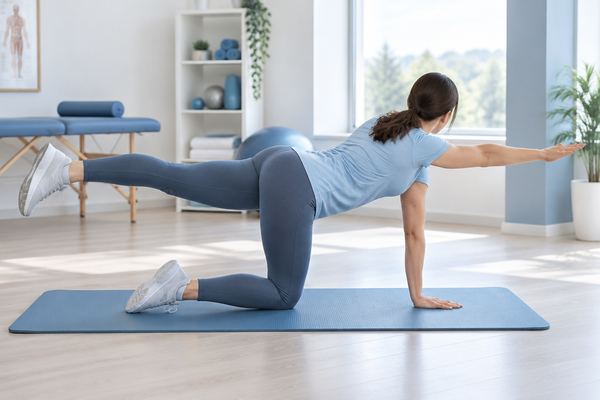
Back pain
Chronic low back pain: what the World Health Organization recommends
The World Health Organization's 2023 guideline on chronic low back pain: what helps, what is not recommended, and why movement comes first.
Physiotherapy in Cyprus
Many people come to physiotherapy for the first time without knowing quite what to expect. Here is what it is, who can legally practise it in Cyprus, and how to make sure your physiotherapist is registered.

World Physiotherapy, the global body for the profession, says physiotherapists help develop, maintain and restore people's movement and ability to function, whenever ageing, injury, illness or other conditions get in the way.
That covers problems with muscles, joints, nerves, breathing and the heart. A physiotherapist always starts with your history and an assessment, then chooses treatment: hands-on techniques, exercise and physical therapies such as heat or electrotherapy.
Physiotherapists look at the whole person, including stress, work and daily life, because all of these affect how you move.
The profession is regulated by the Registration of Physiotherapists Law of 1989, revised in 2005 and 2021. Every physiotherapist must be on the Cyprus Register of Physiotherapists and renew their licence to practise every year.
Applications are reviewed by the Registration Council of Physiotherapists and Physiotherapy Establishments, appointed by the Council of Ministers. Every registered physiotherapist working in Cyprus is automatically a member of the Cyprus Physiotherapy Association, founded in 1989.
The minimum qualification is a four-year, full-time bachelor's degree. Cyprus has three programmes, at European University Cyprus, the University of Nicosia and Frederick University.
Not for private physiotherapy. According to World Physiotherapy, people in Cyprus can go straight to a private physiotherapist. For physiotherapy through GeSY you need a referral from your doctor.
If your physiotherapist finds something that needs a medical opinion, they will tell you to see a doctor.
This article gives general information and does not replace an examination by a doctor or physiotherapist. If you have symptoms, talk to your doctor or book an assessment.
Back pain
The World Health Organization's 2023 guideline on chronic low back pain: what helps, what is not recommended, and why movement comes first.

Back pain
Do I need a scan? Should I rest in bed? Has my disc slipped? The most common myths about low back pain, based on World Physiotherapy.
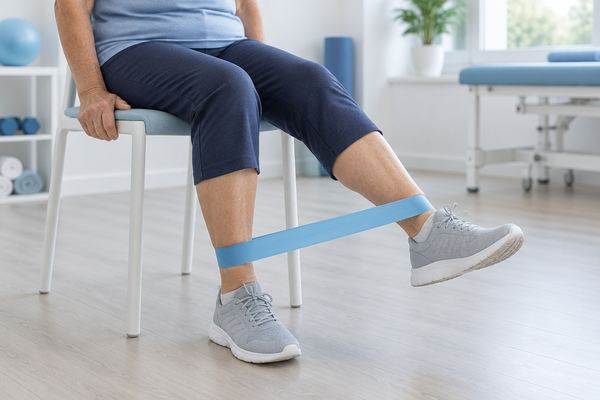
Joints
Osteoarthritis affects 528 million people. What the WHO and World Physiotherapy say about exercise, weight and the wear-and-tear myths.