
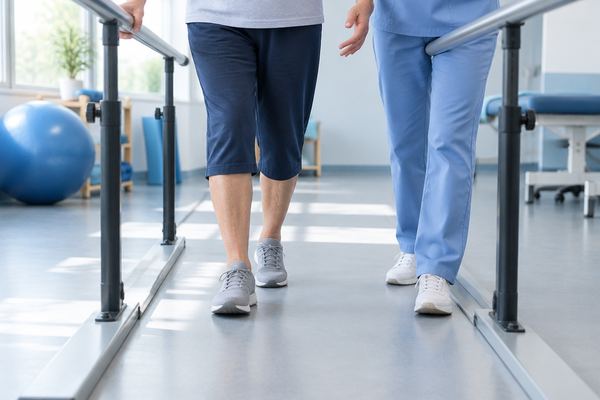
Rehabilitation
Rehabilitation: what it is and why it is not a luxury
2.4 billion people could benefit from rehabilitation. What it is, when it should start and who provides it, according to the World Health Organization.
Work
If you spend hours at a computer, neck and shoulder pain is probably familiar. The EU has had rules on screen work since 1990, and EU-OSHA gives practical advice on sitting.
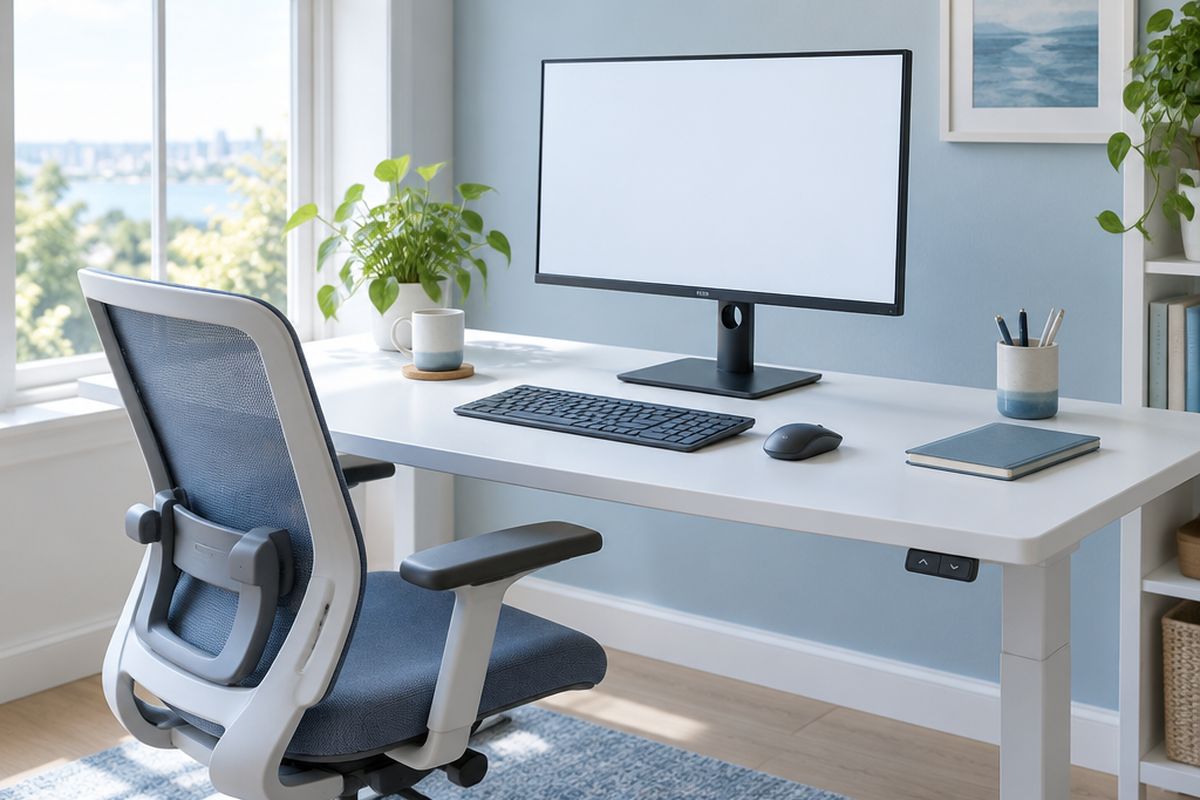
European studies report neck or shoulder symptoms in 30% to 62% of people who work at screens. 39% of EU workers work sitting down and 28% sit almost all the time. Long hours of sitting are linked to low back, neck and shoulder pain.
Council Directive 90/270/EEC covers people who use a screen for a significant part of their normal work. Employers must:
Equipment must meet minimum standards: a screen that swivels and tilts without glare, a separate keyboard, a large enough desk, a chair with adjustable height and backrest, a footrest for anyone who wants one, and good lighting.
As EU-OSHA puts it, the opposite of sitting is not standing; it is moving.
Screen at eye level and straight in front of you, papers in front of you rather than beside the keyboard, forearms supported, mouse close to the keyboard. If your glasses do not suit screen work, get your eyes checked.
If neck pain continues despite these changes, a physiotherapist can help with treatment and exercises that take a few minutes a day.
See how we treat it at the clinic: Neck pain
This article gives general information and does not replace an examination by a doctor or physiotherapist. If you have symptoms, talk to your doctor or book an assessment.
Rehabilitation
2.4 billion people could benefit from rehabilitation. What it is, when it should start and who provides it, according to the World Health Organization.
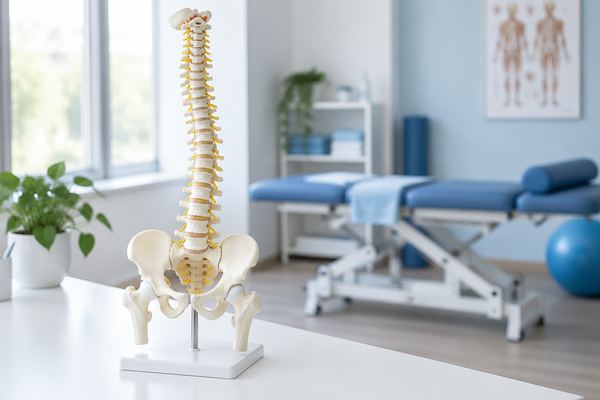
Muscles and joints
1.71 billion people live with musculoskeletal conditions. What they are, why they matter to everyone and what helps, according to the WHO.

Pain
Pain does not always mean damage. What the International Association for the Study of Pain (IASP) says about chronic pain and exercise.